VBeam Laser for Rosacea and Redness: What to Expect
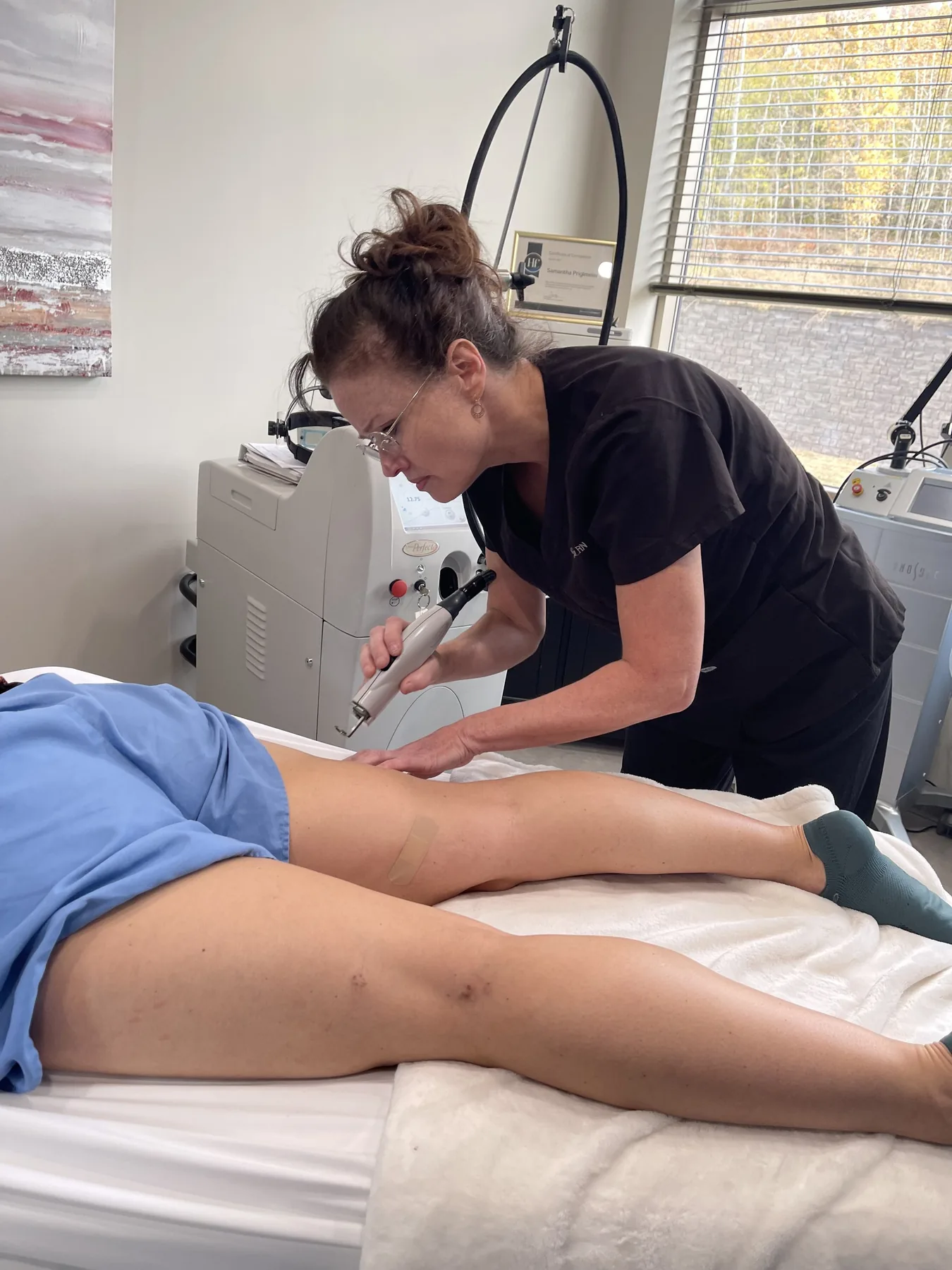
The VBeam is a pulsed dye laser that targets the blood vessels behind facial redness, visible veins, and some red or brown marks. For people with rosacea it can reduce persistent redness and visible vessels, though it does not cure rosacea and results vary. Sessions are short, usually 10 to 15 minutes per area, and a consultation decides whether it is suitable for you.
What the VBeam laser treats
At Minnesota Aesthetic Center in Woodbury, the VBeam pulsed dye laser is used for:
- Small, visible blood vessels on the face, nose, cheeks, and chin
- Benign blood vessel growths, also called angiomas
- Red birthmarks
- Brown age spots, known as lentigines
- Uneven red and brown discoloration, often on the neck and chest, called poikiloderma
It can be used on the face, neck, chest, hands, arms, and legs, including areas where the skin is delicate.
How a pulsed dye laser reduces redness
The laser emits a concentrated pulse of light at a wavelength that is readily absorbed by blood vessels and only minimally absorbed by the surrounding skin. The targeted vessels take up that energy, heat up, and close. Over time, your body gradually reabsorbs the treated vessels through its normal healing process.
Because the energy is so selective, the skin around each vessel is largely spared. The device also cools the skin with every pulse, which adds comfort and helps protect the surface.
Rosacea: what the laser can and cannot do
Rosacea is a long-term skin condition that looks different from one person to the next. Common features include flushing, lasting redness across the cheeks and nose, visible vessels, and sometimes bumps that resemble acne.
Pulsed dye lasers are widely used for the lasting redness and the visible vessels. They are not a treatment for the bumps and pimples, which are usually managed with prescription skincare or medication from your doctor or dermatologist. A laser also does not remove the underlying tendency to flush. New vessels can form over time, especially with ongoing triggers such as sun, heat, alcohol, spicy food, and the cold, windy winters we get in Minnesota.
That is why many people think of laser treatment as one part of managing rosacea. Daily sunscreen, gentle skincare, and knowing your own triggers help results last, and some people return for an occasional maintenance treatment. If your concern is a mix of redness and brown sun spots, a Sciton BBL photofacial may also come up as an option.
What a session is like
It starts with a consultation. Your practitioner reviews your medical history, looks at your skin, and talks through whether VBeam is right for you. You can also review costs, which vary with the size and location of the area being treated.
On treatment day you are given protective eyewear, and the practitioner guides the handpiece over the area. Each pulse brings a mild snapping sensation followed by a burst of cooling. If you can tolerate the snap of a rubber band on your skin, you should tolerate the treatment well, and a numbing cream can be applied for sensitive skin. Treatments are done in the office and usually take 10 to 15 minutes per area.
Bruising, swelling, and aftercare
Will I bruise?
It depends on the settings. Many treatments for general redness leave only mild redness or swelling that settles quickly, often within a day or two. For some stubborn vessels or marks, a provider may recommend stronger settings that can leave dark, bruise-like spots called purpura. These are a known effect of pulsed dye lasers, and they typically fade over one to two weeks. Ask before your session which approach is planned so you can schedule around it.
Aftercare basics
- Use a cool compress if the skin feels warm or puffy, and sleep with your head slightly raised on the first night.
- Wash with a gentle cleanser and use a plain moisturizer. Pause retinoids, acids, and scrubs until your provider says to restart.
- Avoid hot showers, saunas, and hard exercise for a day or two, since heat can increase redness and swelling.
- Protect treated skin from the sun and wear a broad-spectrum sunscreen every day. Do not tan between sessions.
- Do not pick or rub the area. Call the clinic if you notice blisters, crusting, or increasing pain.
- Ask when you can wear makeup again, and hold off on facials, including a HydraFacial treatment, until your provider gives the go-ahead.
Who should wait, and how many sessions to expect
You may not be eligible for treatment if you are currently pregnant, if you have used the acne medication isotretinoin (Accutane) within the past six months, or if you have a recent tan or have tanned within the last four weeks. Tell your provider about every medication and supplement you take, including blood thinners, and do not stop a prescribed medication on your own.
The number of sessions depends on what is being treated. A single vessel or spot may respond sooner than widespread redness, which usually takes a series of treatments spaced several weeks apart. Your provider will suggest a plan after seeing your skin. No one can promise a set number, and results vary.
If cost is part of the decision, ask about paying over time with Cherry, or send a question through our contact page before you book.
Frequently asked questions
Does VBeam hurt?
Most patients feel a mild snapping sensation that is eased by the laser's cooling system, and numbing cream is available for sensitive skin.
How long does bruising last after VBeam?
When bruise-like spots appear, they usually fade within one to two weeks, and many treatments cause no bruising at all.
Will the redness come back?
Treated vessels are cleared by the body, but rosacea is ongoing and new vessels can form, so some people choose maintenance treatments.
How soon will I see a difference?
Some vessels fade quickly, while overall redness tends to improve gradually over several weeks as the body clears the treated vessels.
If redness or visible vessels have been bothering you, book a consultation online and we will look at your skin and tell you plainly what the VBeam can do for it.